Player profiles
Understanding Board Game Player Profiles
Not all board game players engage with the hobby in the same way. Some enjoy occasional games with family and friends, while others dedicate a significant part of their leisure time to discovering new games, exploring different mechanics, building collections, or participating in gaming communities.
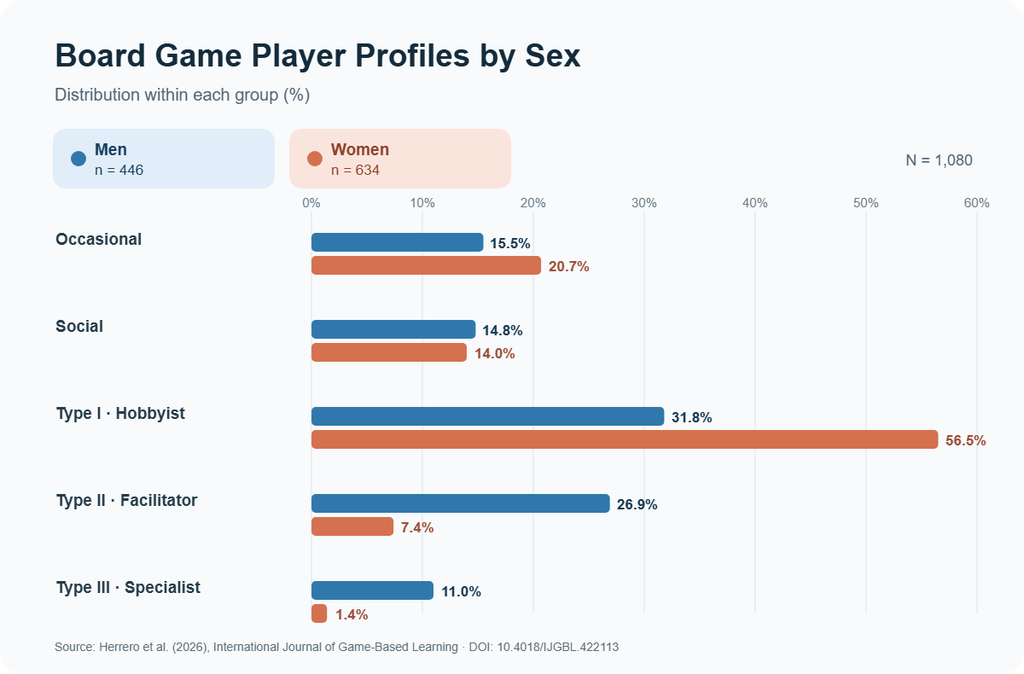
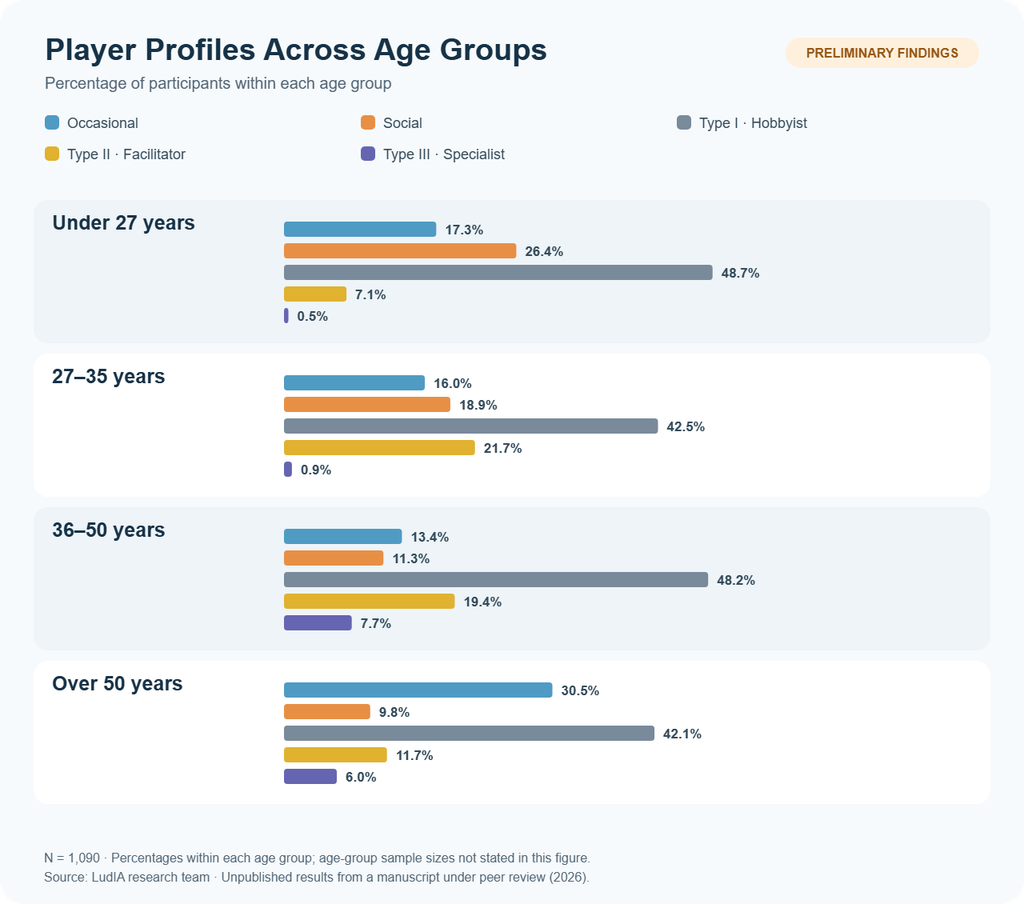
Based on research conducted with 1,090 participants in Spain, our research team developed a classification of five player profiles reflecting different patterns of engagement with board games. These profiles consider three main dimensions: overall involvement in the hobby, social participation, and specialized engagement with board gaming.
Rather than representing fixed personality types or levels of gaming ability, these profiles describe different ways of experiencing and enjoying board games.
Discover the five player profiles below and find out which one best represents you!
5 Types of Player Profiles

Occasional Player
Occasional Players enjoy board games from time to time, usually as a casual leisure activity shared with family or friends. Board gaming is not a central part of their free time, and they tend to play relatively infrequently, often during social gatherings, holidays, or special occasions.
They generally have limited involvement in the broader board gaming hobby, with little emphasis on collecting games, following specialized media, or exploring complex mechanics and strategies.
For Occasional Players, board games are primarily an accessible and enjoyable form of entertainment rather than a regular or highly specialized hobby. Their limited engagement does not necessarily reflect a lack of interest or enjoyment, but simply a different way of incorporating board games into their leisure time.
Social Player
Social Players see board games primarily as an opportunity to connect with others, share experiences, and enjoy time together. For them, the social dimension of gaming is particularly important, often taking priority over competition, strategic complexity, or developing specialized knowledge of the hobby.
They enjoy playing with friends, family, or other groups, valuing the interaction, communication, and shared enjoyment that board games provide. Although they may play regularly, they do not necessarily invest significant time in collecting games, following specialized media, or exploring complex mechanics.
For Social Players, the greatest appeal of board gaming lies in bringing people together, strengthening relationships, and creating memorable shared experiences. Their engagement is defined more by the social role of games than by their level of expertise or involvement in the broader gaming community.
Type I – Hobbyist
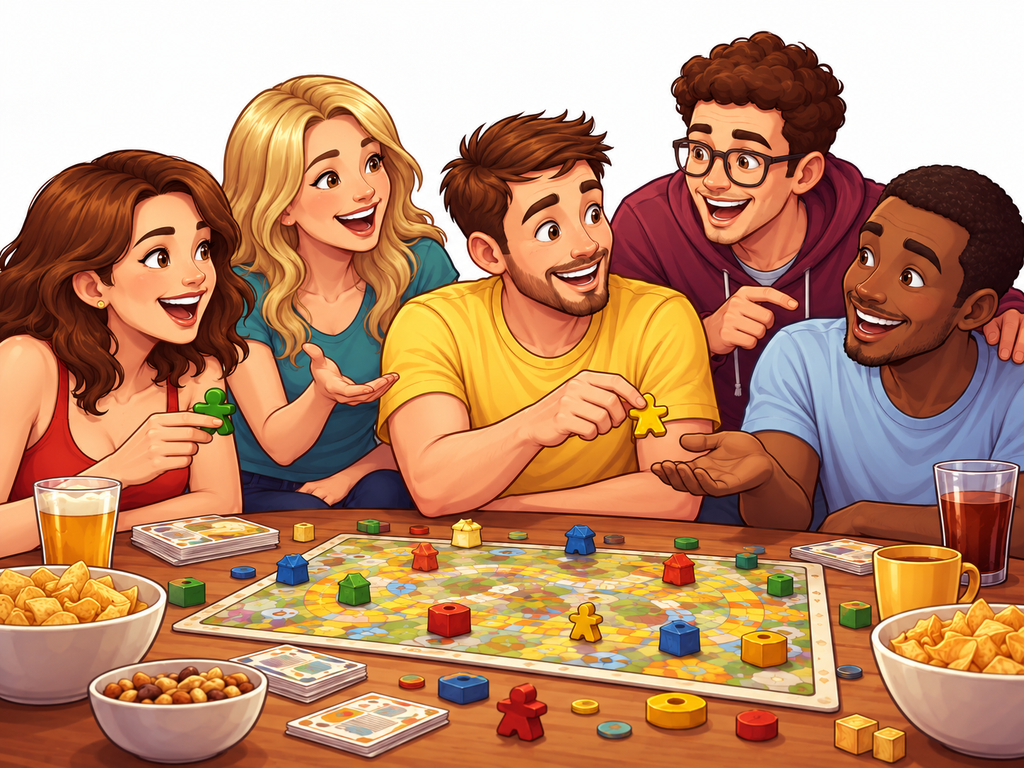
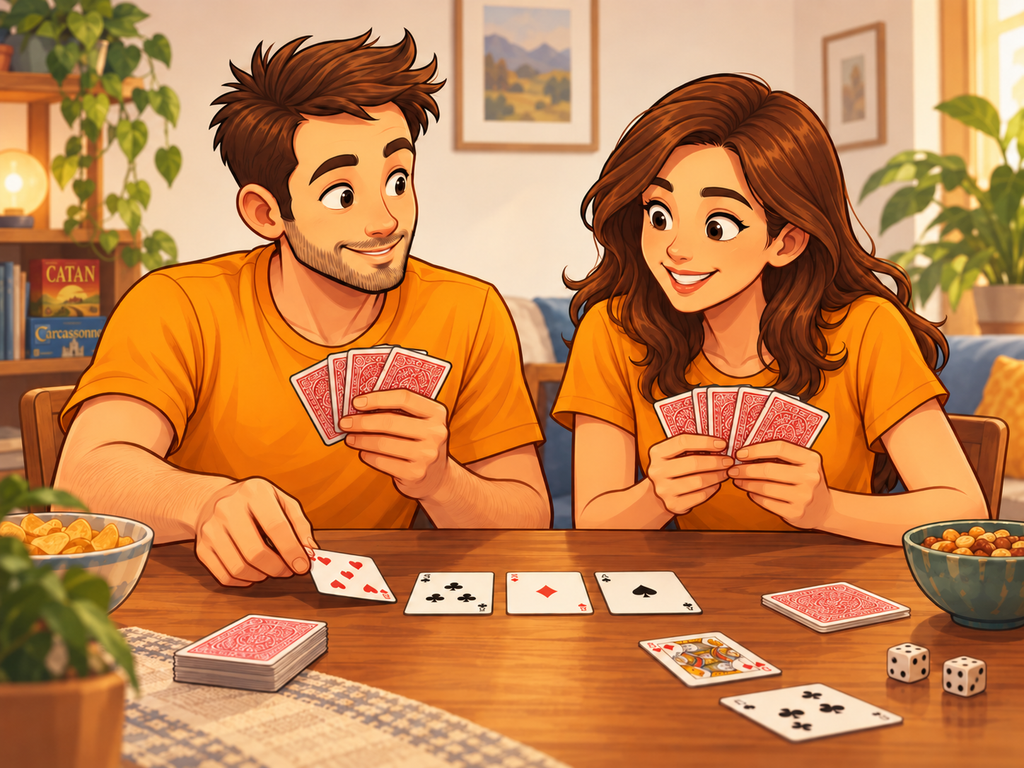
Type I Players are board game enthusiasts who have developed a stable and meaningful interest in gaming. Board games occupy an important place in their leisure time, and they regularly seek opportunities to play, whether with family, friends, or other players.
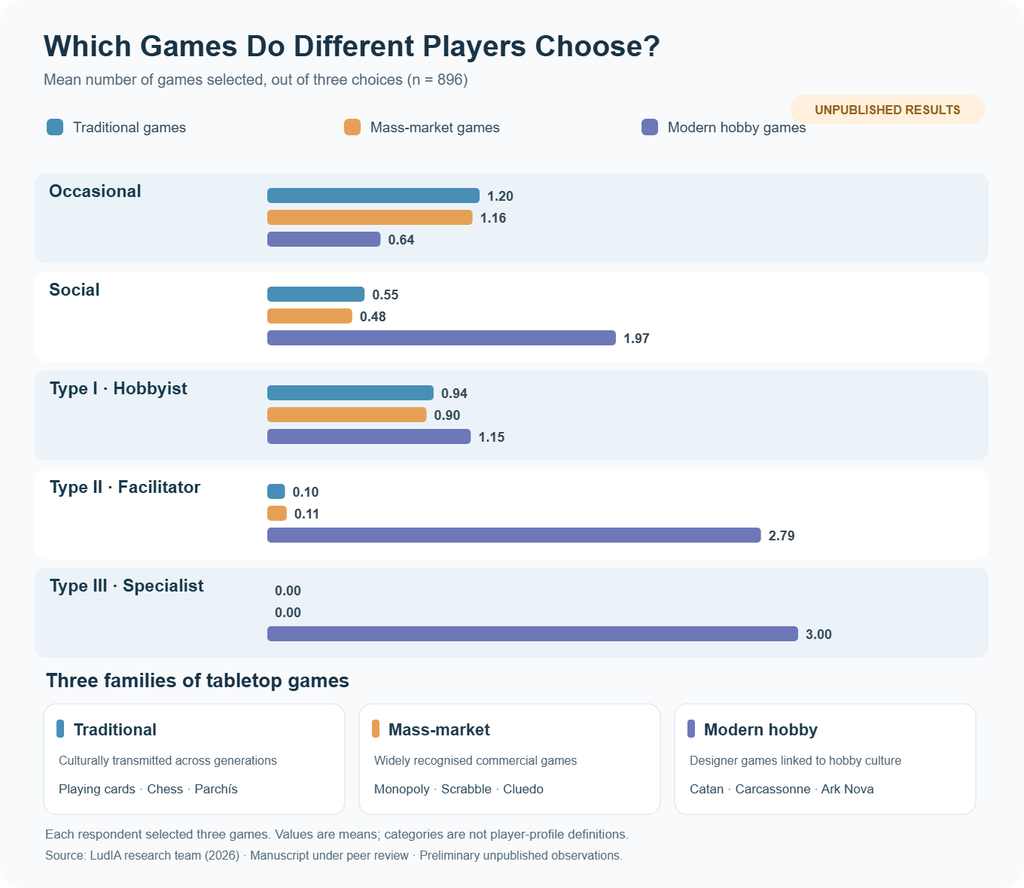
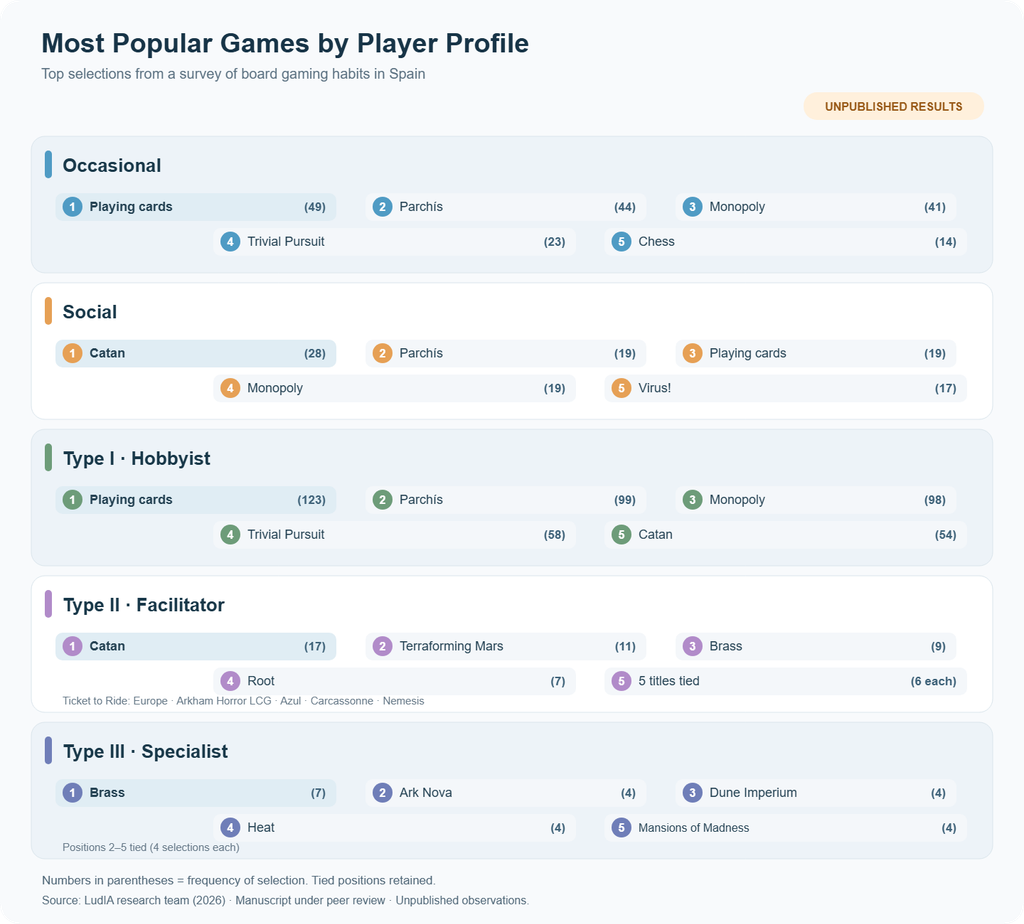
Their enthusiasm is not necessarily linked to modern board games. Someone who frequently enjoys traditional card games, such as poker, bridge, or games played with a Spanish deck, or popular mass-market games such as Monopoly, can also belong to this profile. What defines Type I Players is their consistent engagement with board gaming rather than the complexity, variety, or modernity of the games they play.
Although they may own several games or follow gaming-related content, having a large collection, participating in specialized communities, or possessing extensive knowledge of game mechanics is not essential.
For Type I Players, board gaming is more than an occasional pastime: it is an established and enjoyable hobby that forms a regular part of their leisure activities, without necessarily involving the facilitative or highly specialized engagement associated with other player profiles.
Type II – Facilitator
Type II Players are highly engaged board game enthusiasts who go beyond simply playing by actively helping others enjoy and participate in the hobby. Board gaming occupies a significant place in their leisure time, and they often take the initiative in organizing gaming sessions, introducing games to others, and explaining rules.
They typically show considerable familiarity with different games and their mechanics, allowing them to guide less experienced players and facilitate smooth gaming experiences. They may also participate in gaming events, follow specialized media, or maintain a collection of games, although none of these activities is essential on its own to define this profile.
What particularly characterizes Type II Players is their active role in promoting and facilitating gameplay. They enjoy not only playing but also making games accessible to others, helping new players feel comfortable, and creating opportunities for shared gaming experiences.
Their involvement reflects a strong commitment to the hobby, combining regular participation with initiative, practical knowledge, and a willingness to support other players.

Type III – Specialist
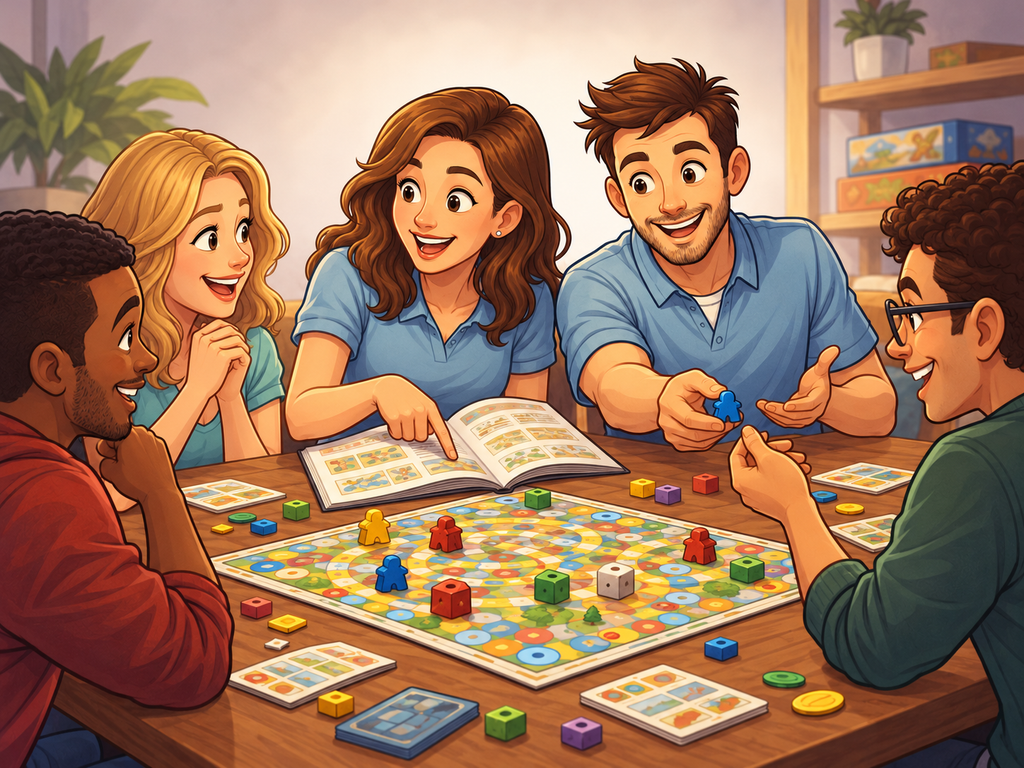
Type III Players are highly engaged board game enthusiasts who demonstrate a particularly strong interest in understanding, exploring, and mastering different aspects of the hobby. Board gaming occupies a prominent place in their leisure time, often extending beyond playing to include learning, analyzing, and discussing games in greater depth.
They typically show considerable familiarity with game rules, mechanics, and strategic systems. They may enjoy exploring complex games, comparing different mechanics, studying strategies, or experimenting with new gaming experiences. Their specialized engagement can also involve following dedicated media, participating in gaming communities, attending events, or exploring games independently.
However, being a Specialist does not necessarily mean owning a large collection, preferring only complex games, or being more skilled than other players. What distinguishes this profile is the depth and diversity of their engagement with the hobby, particularly their interest in its technical, strategic, and analytical dimensions.
For Type III Players, board gaming is not only a source of entertainment but also an opportunity for continuous discovery, intellectual exploration, and a deeper understanding of how games work.